Note_Tech
All technological notes.
Project maintained by simonangel-fong Hosted on GitHub Pages — Theme by mattgraham
DSA - Doubly Linked Lists
Doubly Linked Lists
-
Doubly linked list-
a linked list in which each node keeps an explicit reference to the node before it and a reference to the node after it.
-
allow a greater variety of
O(1)-time update operations, including insertions and deletions.
-
-
next:- the reference to the node that follows another.
-
prev:- the reference to the node that precedes it.
-
sentinels (or guards)- special nodes are added at both ends of the list.
- a
header nodeat the beginning of the list - a
trailer nodeat the end of the list.

class Node:
    def __init__(self, value):
        self.value = value
        self.next = None
        self.prev = None


class DoublyLinkedList:
    def __init__(self, value) -> None:
        new_node = Node(value)
        self.head = new_node
        self.tail = new_node
        self.length = 1
Append(): O(1)
def append(self, value):
    new_node = Node(value)
    if self.head is None:
        self.head = new_node
        self.tail = new_node
    else:
        self.tail.next = new_node
        new_node.prev = self.tail
        self.tail = new_node
    self.length += 1
    return True
Prepend(): O(1)
def prepend(self, value):
  new_node = Node(value)
  # When dll has only one node, head=tail=node
  if self.length == 0:
      self.head = new_node
      self.tail = new_node
  # when dll has more than one node
  else:
      new_node.next = self.head
      self.head.prev = new_node
      self.head = new_node
  self.length += 1
  return True
Pop():O(1)
def pop(self):
  if self.length == 0:
      return None

  temp = self.tail
  # When dll has only one node, then head=tail=None
  if self.length == 1:
      self.head = self.tail = None
  # When dll has more than one node
  else:
      self.tail = self.tail.prev
      self.tail.next = None
      temp.prev = None
  self.length -= 1
  return temp
Pop_first(): O(1)
def pop_first(self):

  if self.length == 0:
      return None

  temp = self.head
  # when dll has only one node, then head=tail=none
  if self.length == 1:
      self.head = self.tail = None
  # when dll has more than one node
  else:
      self.head = self.head.next
      self.head.prev = None
      temp.next = None
  self.length -= 1
  return temp
Get(): O(n)
def get(self, index):
    if index < 0 or index >= self.length:
        return None
    temp = self.head
    # if index is on the first half, traverse from the head
    if index < self.length/2:
        for _ in range(index):
            temp = temp.next
    # if index is on the second half, traverse from the tail
    else:
        temp = self.tail
        for _ in range(self.length - 1, index, -1):
            temp = temp.prev
    return temp
Set_value(): O(n)
def set_value(self, index, value):
    temp = self.get(index)
    if temp:
        temp.value = value
        return True
    return False
Insert(): O(n)
-
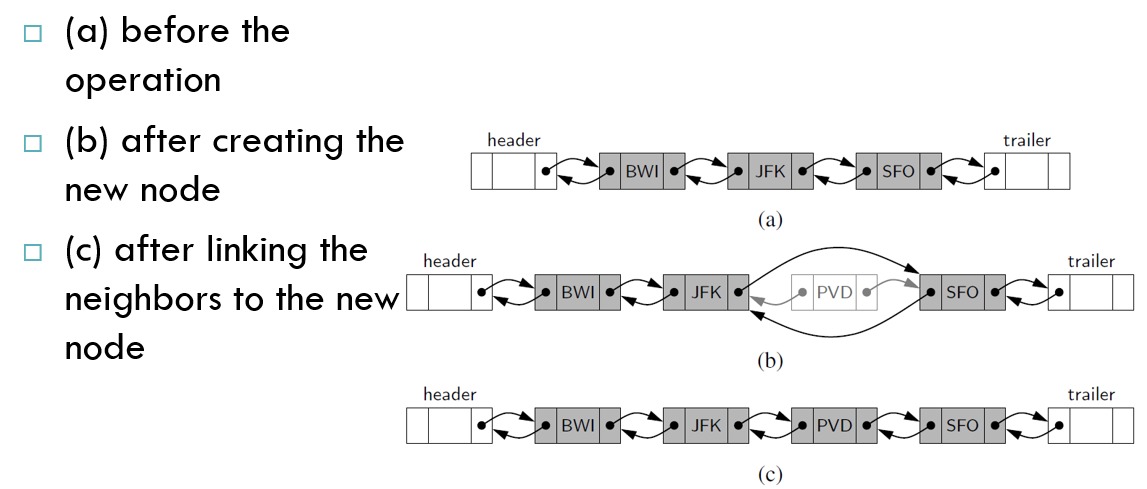
Every insertion into our doubly linked list representation will take place between a pair of existing nodes
-
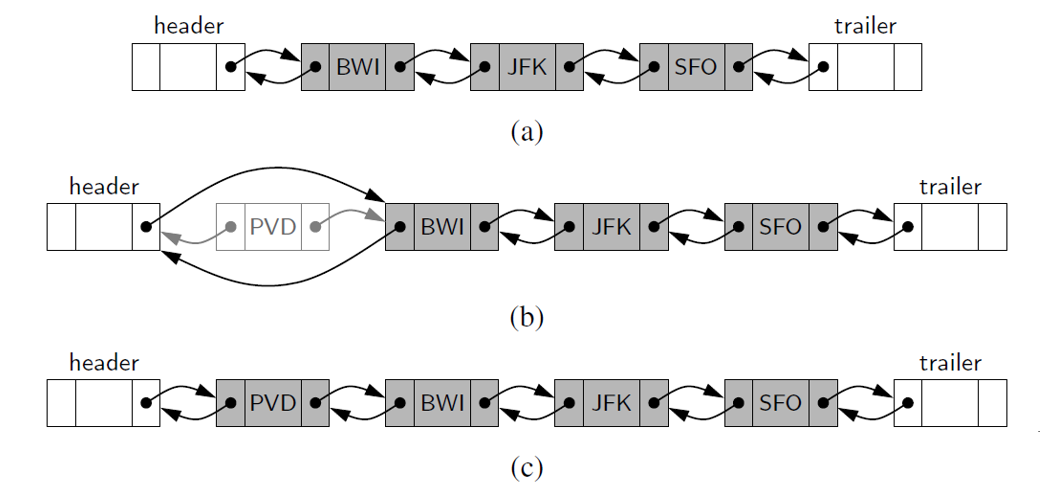
When a new element is inserted at the front of the sequence, we will simply add the new node between the header and the node that is currently after the header.
def insert(self, index, value):
    if index < 0 or index > self.length:
        return False
    if index == 0:
        return self.prepend(value)
    if index == self.length:
        return self.append(value)

    new_node = Node(value)
    before = self.get(index - 1)
    after = before.next

    new_node.prev = before
    new_node.next = after
    before.next = new_node
    after.prev = new_node

    self.length += 1
    return True
Remove(): O(n)
-
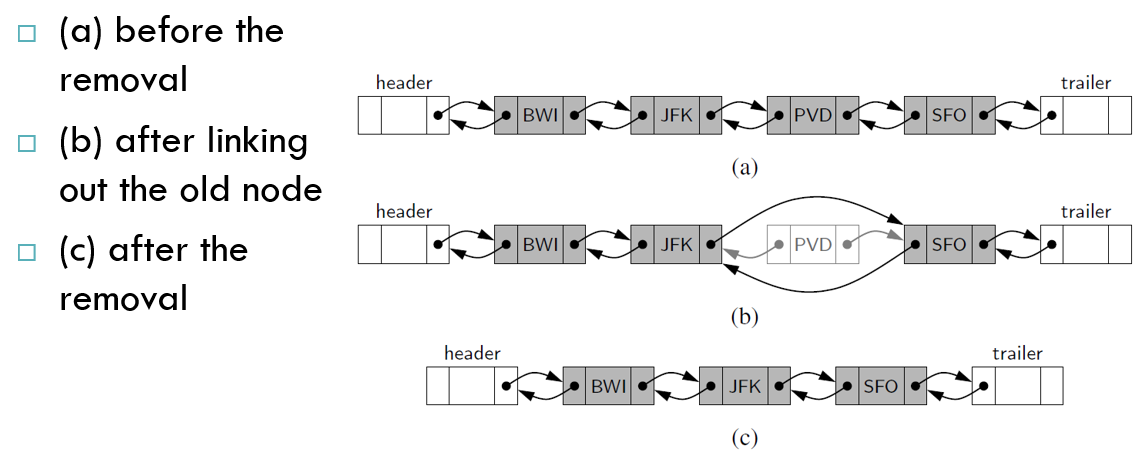
The two neighbors of the node to be deleted are linked directly to each other
-
As a result, that node will no longer be considered part of the list and it can be reclaimed by the system.
-
Because of sentinels, the same implementation can be used when deleting the first or the last element of a sequence.
def remove(self, index):
    if index < 0 or index >= self.length:
        return None
    if index == 0:
        return self.pop_first()
    if index == self.length - 1:
        return self.pop()

    temp = self.get(index)

    temp.next.prev = temp.prev
    temp.prev.next = temp.next
    temp.next = None
    temp.prev = None

    self.length -= 1
    return temp